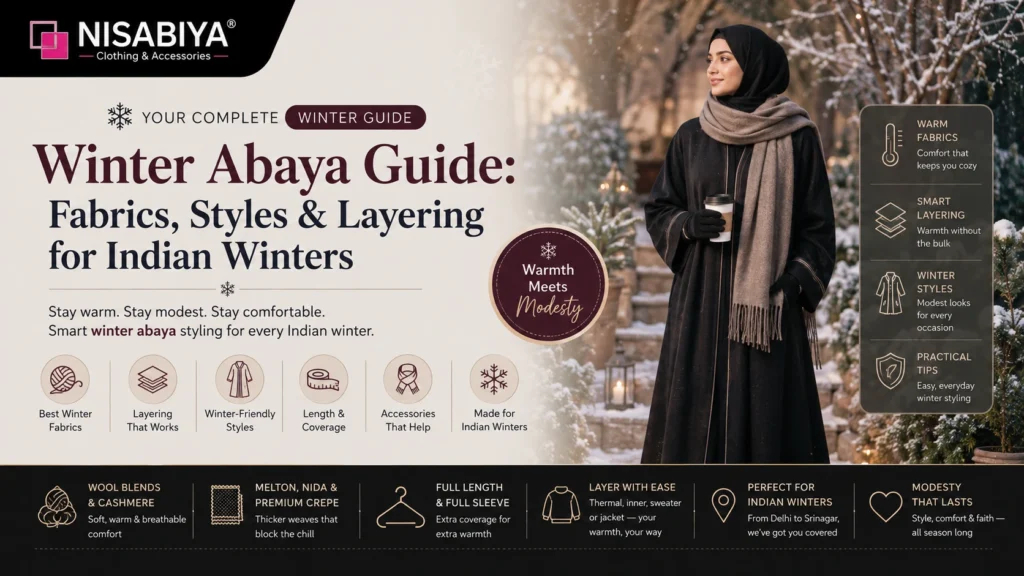
Indian winters aren’t Siberian — but they’re cold enough that the same crepe abaya that works in June leaves you shivering by January, especially in Delhi, Lucknow, Srinagar or anywhere north of Nagpur after sunset. The solution isn’t a coat that ruins your modest look; it’s a winter abaya chosen for warmth, plus a few layering habits that add heat without adding bulk. Here’s the practical guide to winter abayas for Indian weather — fabrics, cuts and layering that actually work.
If you need to refresh your fabric basics first, our fabric comparison guide explains crepe, nida and georgette. This post builds on that with winter-specific advice.
What Makes an Abaya Warm
An abaya keeps you warm the same way any garment does — by trapping a layer of still air between you and the cold. Three things control how well a winter abaya does this:
- Fabric weight. Heavier weaves trap more air. A winter abaya uses noticeably heavier fabric than a summer one.
- Coverage. Length and sleeve coverage are free warmth. Full-length and full-sleeve abayas keep warmth where a cropped piece loses it.
- Layering space. A winter abaya that fits over a warm base layer — a thermal, a sweater or a thick kurta — does the work of three garments.
Once you understand that, most winter abaya decisions become obvious.
Fabrics That Keep You Warm
Wool Blends and Heavy Crepe
Wool-blend abayas are the warmest option for genuinely cold northern winters. They trap heat beautifully and breathe enough to avoid overheating indoors. Heavy crepe — the same soft, matte crepe you know from summer, in a much heavier weave — is the practical all-rounder: warm, elegant and comfortable through a full day of temperature changes.
Nida and Structured Fabrics
Nida matte in a heavier weight is a strong winter abaya choice for formal settings — it’s opaque, structured and holds warmth better than its summer-weight version. Pair it with a thermal base layer and you’re set for the coldest meetings.
Velvet and Winter Silks
For evenings, Eid and winter weddings, velvet abayas are the winter statement piece — richly warm and deeply elegant. Velvet traps heat, looks luxurious and photographs beautifully under winter light. Our embroidered and occasion abaya collection has options in this range.
Fabrics to Avoid
Lightweight georgette, chiffon and summer crepe are beautiful but useless against winter cold on their own. If you love them, they belong in the layering system — never as your only winter abaya.
Winter Abaya Silhouettes
Closed Abaya for Everyday Warmth
The closed silhouette traps your body heat best because it doesn’t let cold air in through an open front. For daily winter wear, a closed winter abaya in a heavy fabric, over a warm base layer, is the most efficient option. Check for generous ease — you need room for the layers underneath. Our abaya styles guide explains the closed cut in detail.
Front-Open for Temperature Control
Front-open winter abayas are the temperature-control specialists. Wear them open over a sweater in the afternoon when the sun is out, close them (or belt them) as the evening drops. They’re also the easiest to remove indoors without changing your whole outfit.
Kaftan and Cape Styles
Wide, roomy kaftans and capes give you space for heavy layering underneath while looking effortlessly elegant. A cape abaya over a warm kurta is a stylish winter formula that’s been a consistent favourite in Gulf winters too — you can see the style referenced across modest fashion coverage in Harper’s Bazaar Arabia.
How to Layer Under a Winter Abaya
Layering is where the real warmth comes from. A proven winter abaya layering order:
- Thermal base layer. A slim cotton or merino thermal under everything — invisible and enormously effective.
- Mid layer. A soft knit, sweater or thick kurta. This is the warmth you can remove when indoors.
- The winter abaya. Your outer modest layer, sized to fit over both layers without pulling at the shoulders.
- Outer wrap if needed. A shawl or modest wrap over the abaya for outdoor waits and early-morning commutes. Remove it indoors.
The golden rule: buy your winter abaya with the layers in mind. Measure with your warmest mid layer on, or add a few centimetres of ease in the pattern — our size guide explains how to measure for a layered fit.
Winter Hijab Choices
Your hijab is part of your winter armour. Swap summer chiffon for jersey, wool or a heavier viscose hijab in winter — they keep your head and ears warm and hold their shape under a coat. Our hijab fabric guide covers the winter options. If you wear a khimar, a winter-weight khimar in a heavier fabric adds meaningful warmth to your upper body.
Winter Abaya Accessories
The right accessories finish a winter abaya look and add real warmth at the same time:
- Warm hijab fabrics. Jersey, wool or heavier viscose hijabs keep your head and ears warm — far better than summer chiffon. See our hijab fabric guide for the winter options.
- A modest shawl or wrap. The easiest extra layer for outdoor waits, morning commutes and evening events. Drape it over the abaya and remove it indoors — it’s the most flexible winter accessory.
- Lined gloves and closed shoes. Simple, practical additions that keep the whole look complete without breaking modesty.
- A warm bag-friendly layering top. If you’re moving between hot indoor and cold outdoor spaces all day, a thin thermal cardigan under the abaya lets you adjust without changing outfits.
These aren’t luxuries — in a Delhi or Srinagar winter they’re the difference between a comfortable day and a miserable one. Our abaya accessories guide has more on building a modest accessory kit across seasons.
Caring for Your Winter Abaya
Winter fabrics need a little more respect. Wool blends should be dry cleaned or hand washed cold; velvet should be steamed rather than ironed; heavy crepe follows the same care rules as your regular abayas — see our abaya care guide for the full routine. Store winter abayas on padded hangers, not folded, so they don’t crease in the off-season.
Frequently Asked Questions
Winter Abaya — Your Questions Answered
What is the warmest fabric for a winter abaya?
Wool blends are the warmest. Heavy crepe and heavyweight nida are the best everyday options that stay comfortable indoors as well as outdoors.
Can I wear my summer abaya in winter?
Yes, if you layer — a thermal plus a sweater under a summer abaya sized generously works well. But a dedicated winter abaya in a heavier fabric is much more efficient.
How should I size a winter abaya?
Measure with your warmest base layer on, or tell us you want extra ease for layering. A winter abaya that fits snugly over a sweater will pull at the shoulders all day.
Are velvet abayas suitable for winter weddings?
Yes — velvet is one of the most elegant winter abaya fabrics, warm, rich and perfect for evening and wedding occasions.
Do you make custom winter abayas?
Yes — we stitch winter abayas in wool blends, heavy crepe, nida and velvet, sized for layering, with length and sleeve options you choose.
Stay Warm in a Winter Abaya Done Right
A winter abaya is about smart fabric, roomy cuts and a simple layering system — not about buying a coat you’ll never wear. Choose heavy fabric, size for layers, and pair with a warm hijab and you’ll stay comfortable through the coldest Indian nights. Browse our custom abaya collection for winter silhouettes, or message us on WhatsApp with your city and winter routine — we’ll recommend the winter abaya fabric and fit for your weather.
NISABIYA® Styling Team — Custom abaya, burqa, naqab & hijab specialists — Pan India delivery since 2018.
Winter Abaya, Made to Order — Wool blends, heavy crepe and velvet, stitched to fit over your layers.
View Designs · Order on WhatsApp
N
NISABIYA® Styling Team
Custom abaya, burqa, naqab & hijab specialists — Pan India delivery since 2018.