Custom Abaya Care Guide: A well-fitted custom abaya is an investment — in time, in fabric, and in the back-and-forth it takes to get the measurements exactly right. It’s genuinely disappointing to watch that same piece lose its shape after two washes, or fade unevenly because it sat crumpled in a drawer for a season. Almost none of that is inevitable. Fabric care for abayas is simple once you know the handful of rules that actually matter, and this guide walks through all of them.
If you haven’t ordered your piece yet, our size guide is worth reading first — but if you already have one from our custom abaya collection, this is everything you need to keep it in great shape.
Start With Knowing Your Fabric
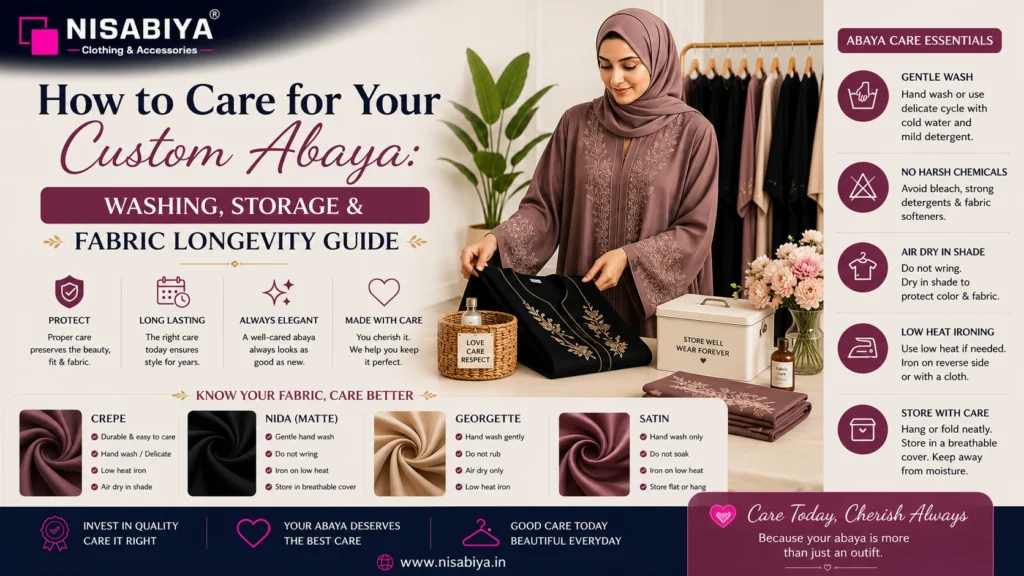
Care instructions genuinely differ by fabric, and guessing wrong is the single biggest reason abayas get damaged in the wash. The three fabrics we stitch with most often each behave differently:
Crepe — durable and relatively forgiving, but can develop a slight sheen or texture change if washed in hot water repeatedly.
Nida (matte) — holds its structure well but is prone to static and can pick up lint, so it needs gentler handling during drying.
Georgette — the most delicate of the three, lightweight and prone to snagging or losing drape if machine-washed carelessly.
If you’re not sure which fabric your piece is, check the note that came with your order confirmation, or simply message us — we keep a record of every custom order’s fabric choice and can tell you in seconds.
Most abaya damage isn’t from wearing it too much — it’s from washing it the wrong way just once.
Washing: What Actually Works
Hand wash where possible. Cool or lukewarm water, a mild detergent, and gentle agitation is the safest option for all three fabrics, especially anything with embroidery or delicate seams.
If machine washing, always use a mesh laundry bag, the gentle/delicate cycle, cold water, and skip the spin cycle entirely or use the lowest available spin speed — high-speed spinning is what most commonly distorts the shoulder and sleeve shape.
Never soak dark fabrics in hot water. Heat accelerates dye bleeding and fading, particularly on black and deep jewel-tone pieces, even ones marketed as colorfast.
Wash similar colors together and separately from anything with zippers, buttons, or rough textures that can snag delicate weaves.
🧴
Ask Us Anything
Not Sure How to Wash Your Specific Piece?
Send us a photo and we'll tell you exactly what it needs
This is where most of the real damage happens, more than washing itself. A few rules that make a measurable difference:
Never tumble dry. Heat from a dryer is the fastest way to shrink or warp crepe and nida fabric permanently. Air dry flat or on a wide, padded hanger instead.
Dry away from direct sunlight. UV exposure fades dark colors unevenly, especially along the shoulders and front panel where light hits most directly.
Iron on the reverse side, on a low-to-medium setting, and always with a thin cotton cloth between the iron and any embroidered or beaded area — direct heat on embellishment can melt thread or loosen stonework.
For georgette, skip ironing altogether where possible and use a fabric steamer instead — direct iron contact on very lightweight weaves can leave a permanent shine mark.
Storage: The Step Everyone Skips
How you store an abaya between wears matters almost as much as how you wash it. A few habits worth building:
Use padded or wide hangers, never thin wire ones — wire hangers create visible shoulder dimples over time that are difficult to steam out.
Store in a breathable garment bag, not sealed plastic, especially in humid climates — trapped moisture encourages mildew and musty odors on natural fiber blends.
Fold embroidered pieces with tissue paper between the folds if hanging space is limited, to prevent the embellishment from pressing into and marking the fabric underneath.
Keep a small silica gel packet in your wardrobe section during monsoon months — it makes a genuinely noticeable difference against the humidity common across most of India.
For general background on why humidity and fiber type interact the way they do, the overview on textile fiber properties on Wikipedia is a reasonable, neutral starting point if you’re curious about the science behind it.
Handling Stains Without Making Them Worse
The instinct to scrub a fresh stain immediately is usually the wrong one on delicate fabric. Blot, don’t rub — rubbing pushes the stain deeper into the weave and can damage the fibers themselves. For oil-based stains (a common one, given how much time abayas spend near food at gatherings), a small amount of cornstarch or talcum powder left on the spot for 15–20 minutes before gently brushing it off can lift a surprising amount before you even reach for water.
How Often Should You Actually Wash It?
Contrary to habit, abayas worn over regular clothing generally don’t need washing after every single wear — over-washing is itself a common cause of premature fading and fabric fatigue. For most people, airing the piece out after wear, spot-cleaning any visible marks, and doing a full wash every 4–6 wears (sooner for anything worn in heavy heat or humidity) strikes the right balance between hygiene and longevity.
Got a stain or care question? Send us a photo on WhatsApp — we'll tell you honestly whether it's fixable at home or better left to a professional cleaner.
Yes, dry cleaning is a safe option for most fabrics we use, especially heavily embroidered pieces. Just inform the cleaner it's a delicate custom-stitched garment so they use an appropriately gentle process.
This is usually from residual detergent or hard water minerals building up on the fabric surface. A vinegar rinse (a small amount in the final rinse water) can help restore some of the depth of color.
We generally recommend avoiding fabric softener on nida and crepe, since it can leave a slight residue that dulls the fabric's natural matte finish over time. A mild detergent alone is usually sufficient.
Yes, we offer repair and touch-up stitching for pieces we've made. Message us with a photo of the affected area and we'll advise on cost and turnaround.
Get More Years Out of Every Piece
A little care goes a long way — the same fabric that lasts two washes with the wrong routine can comfortably last two years or more with the right one. Browse our custom abaya collection for your next piece, revisit our size guide if you’re ordering again, or message us directly with any specific fabric question.
Also useful: our guide on embroidered abaya trends if your next piece is for a special occasion and needs extra care from day one.
N
NISABIYA® Styling TeamCustom abaya, burqa, naqab & hijab specialists — Pan India delivery since 2018.
Loved this guide? Get styled by our team on WhatsApp — free advice, no obligation.