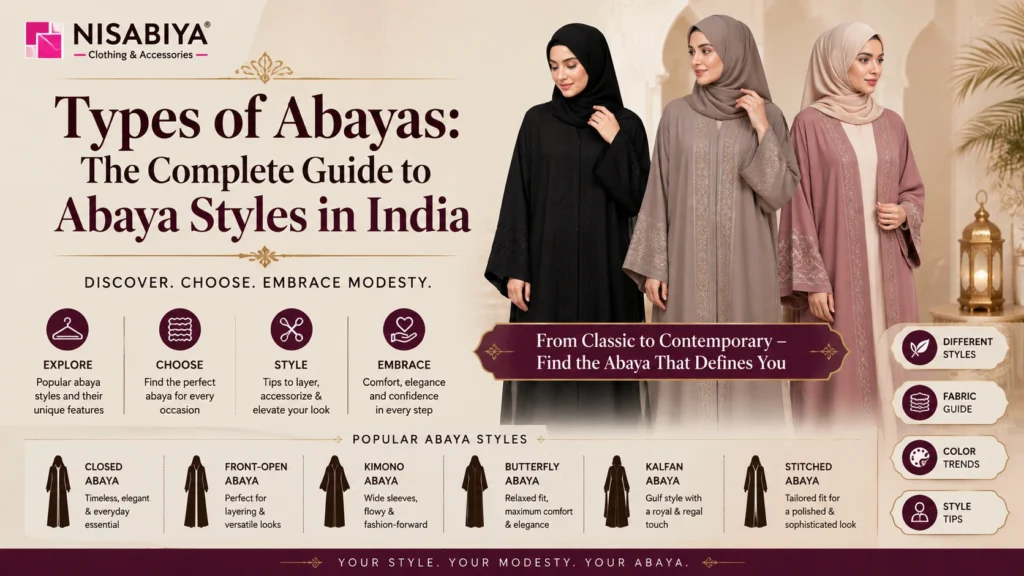
If you’ve spent any time browsing abayas online, you’ve probably noticed the same few words everywhere — kimono, butterfly, kaftan, front-open — and wondered what actually separates one from the next. The honest answer is that the types of abayas overlap more than most guides admit, and the differences that matter are about cut, drape and how the garment falls on your body, not clever naming. This guide covers the main abaya styles we stitch every week, in plain language, so you can describe exactly what you want on WhatsApp without any guesswork.
If you’re newer to Islamic wear, our plain-language guide to burqa, naqab and abaya is a useful first stop. This post assumes you already know you want an abaya and just need to pick the silhouette.
The Closed Abaya: The Classic Starting Point
The closed abaya is the one most people picture first — a full-length, slip-on garment with no front opening, usually with a zip at the back or side. It’s the most traditional cut and the easiest to wear, which makes it the safest first custom order.
Best for: daily wear, commuting, prayer, travel, and anyone who wants one reliable piece.
What to check: the neckline and sleeve opening — a well-made closed abaya should let you put it on and take it off without distorting the shoulders.
Variations: some closed abayas add a removable belt or subtle pleats at the hem for shape without a visible opening.
Front-Open & Kimono Abayas: Built for Layering
Front-open abayas are cut like a long coat and worn over a dress, kameez or any base layer. The kimono style takes this further with wide, structured sleeves and a clean fall from the shoulder, often with no fastening or a single button at the top. It’s consistently one of the more popular cuts in our custom orders because one piece effectively replaces several outfits.
Why they’re popular: they turn any modest outfit underneath into a new look, which is why front-open and kimono pieces make up a large share of our custom abaya collection.
Best for: work, college, shopping days and anyone who likes changing looks without changing the whole outfit.
What to check: sleeve width and the way the front panels sit — a kimono that gaps open at the chest when you move is a common fit complaint we fix in custom stitching.
Butterfly & Flared Abayas: Movement First
The butterfly abaya uses an extra panel of fabric under each arm so the silhouette flares out in an elegant wing shape when you walk or raise your arms. Flared abayas do something similar with a simpler A-line cut and a full, flowing hem.
Best for: occasions, Eid, photos, and anyone who loves the feeling of fabric moving with them.
What to check: fabric weight — a heavier fabric defeats the floating effect of a butterfly cut, so lightweight crepe or georgette is usually the right call.
Kaftan & Cape Abayas: The Statement Silhouettes
Kaftan abayas are loose, roomy and cut straight from the shoulder, with wide sleeves that give them a relaxed, regal look — the silhouette you’ll most often see in Gulf and North African modest fashion. Cape abayas layer an open panel over a fitted underdress for a dramatic, modern effect.
Best for: weddings, gatherings and anything where you want the abaya itself to be the outfit.
Fabric note: kaftans need a fabric with good drape — crepe and chiffon work far better than stiff nida here.
Tailored & Office Abayas: Sharp but Modest
Tailored abayas are cut closer to the body with structured seams, darts and a more refined shape — the professional end of the modest fashion spectrum. Because they read as formal and polished, tailored pieces are the backbone of the office abaya category we cover separately.
Best for: work, interviews, conferences and any setting with a formal dress expectation.
What to check: ease across the shoulders and bust, since a tailored abaya that’s even slightly tight will show it all day.
Embroidered & Occasion Abayas: When the Abaya Is the Event
Embroidered abayas add zari, stone, thread or mirror work to any of the silhouettes above, turning an everyday piece into occasion wear. We cover the styling side of these in our embroidered abaya trends guide, but the short version is: keep the silhouette simple so the embroidery can shine. Length, sleeves and neckline can be fine-tuned in any custom order too — you don’t need seamstress terminology to describe them, just plain words our team can translate into a pattern.
The best type of abaya isn’t the trendiest one — it’s the cut that matches how you actually live and move through your day.
How to Choose Between These Types of Abayas
With so many types of abayas to choose from, the shortcut we give customers every day is to answer three questions rather than decide from photos alone:
Where will you wear it most? Daily and commuting → closed or tailored. Occasions and Eid → butterfly, kaftan or embroidered. Mixing both → front-open or kimono.
How much movement do you need? Raising arms freely, sitting long hours, climbing stairs — flared cuts and kimono sleeves give the most ease.
How do you want it to feel? Structured and crisp, or soft and flowing? That single preference eliminates half the options immediately.
Once you’ve narrowed it down, take your measurements using our size guide so the custom cut is right the first time, and settle the fabric — our fabric comparison covers crepe, nida and georgette in detail if you need it.
If you’re ordering for a specific event rather than daily wear, add a fourth question: what’s the occasion? Eid and family gatherings suit butterfly or embroidered cuts, weddings suit kaftans and cape styles, and formal work settings suit tailored or closed silhouettes. Knowing the occasion before you message us saves a round of back-and-forth.
🧵
Custom Abaya India
Any of These Silhouettes, Stitched to Your Measurements
Tell us the cut you like on WhatsApp and we'll make it custom
For most people, a closed abaya in crepe or nida is the most comfortable daily option — it needs no styling, moves well, and survives frequent washing better than delicate cuts.
Not exactly. All kimono abayas are front-open, but not all front-open abayas are kimonos — the kimono specifically has wide, structured sleeves and a straighter fall from the shoulder.
Yes — every style we've covered can be fully customised for sleeve style, length, neckline and fit. That's the whole point of ordering custom rather than ready-made.
Tailored and closed abayas with a slightly higher hem and narrower sleeves tend to flatter shorter frames most, since heavy flared cuts can overwhelm a petite silhouette.
Focus on ease and proportion rather than rules: flared cuts suit anyone who wants movement, tailored cuts suit anyone who wants structure, and our team can guide you by photo before you order.
Start With the Right Silhouette
Choosing among the types of abayas is the first real decision in any custom order — and getting the silhouette right makes everything after it easier. Browse our custom abaya collection for inspiration, compare current Gulf abaya styles if you want the latest trends, or message our team with a photo of a style you like and we’ll help you pick the type that works for your body and your routine.
N
NISABIYA® Styling TeamCustom abaya, burqa, naqab & hijab specialists — Pan India delivery since 2018.
Loved this guide? Get styled by our team on WhatsApp — free advice, no obligation.