An office abaya has to do something a regular abaya doesn’t: survive a full working day — commuting, sitting at a desk for hours, meetings, rushing between floors — while still looking sharp and intentional at 6 PM. It’s a surprisingly specific ask, and it’s why “what should I wear to work?” keeps coming up with our customers in banking, education, healthcare and government roles. This guide covers how to choose one that looks professional, stays comfortable for long hours, and keeps its shape wash after wash.
If you’re deciding between silhouettes, our types of abayas guide is a good companion — this post is specifically about making modest wear work in a professional setting.
What Makes an Abaya Suit the Office
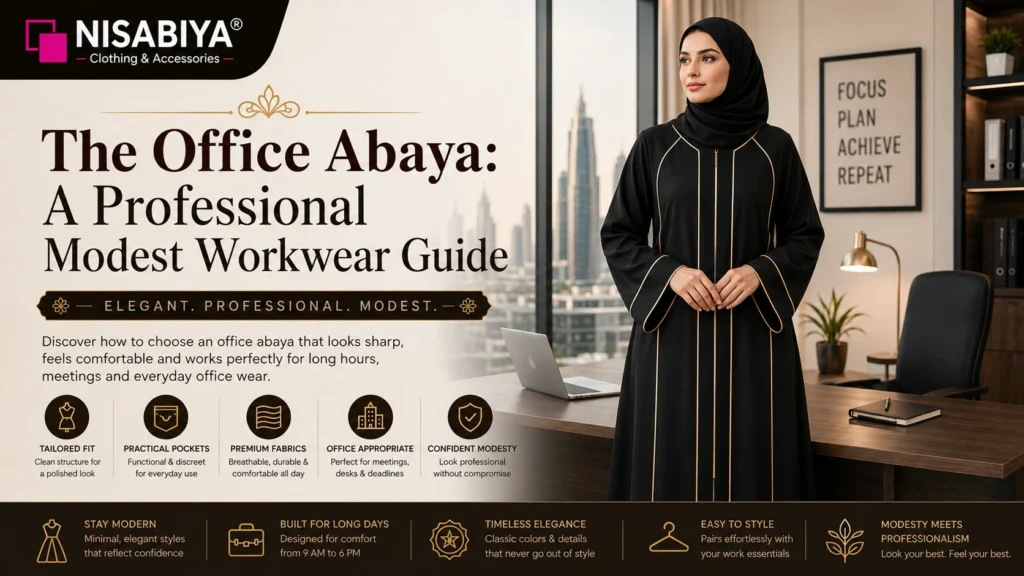
Three qualities separate a good work abaya from a good everyday one. First, structure: a tailored cut with clean seaming reads professional in a way that a flowing kaftan doesn’t. Second, practicality: pockets, a length that stays put when you sit, and sleeves that don’t drag across a desk or keyboard. Third, low maintenance: an office piece needs to survive weekly washing and still look crisp, which rules out delicate fabrics and heavy embellishment. When these three come together, the piece stops being something you think about — which is exactly the point.
What to Look for in an Office Abaya
Fit with ease, not tightness. A tailored abaya should follow your frame without clinging — make sure there’s enough ease across the shoulders and bust for a full day of sitting, standing and reaching. Getting this right is why we recommend our home measurement guide before any custom order.
Practical pockets. This sounds small, but for a phone, keys, pass card and a lip balm, functional pockets genuinely change how an abaya feels to work in. Ask for them explicitly when you order — most standard patterns don’t include them unless requested.
The right sleeve. Three-quarter or close-fitted full sleeves are the office workhorses; wide kimono sleeves snag on chairs and desks. If you love a wider sleeve, a fitted cuff keeps the look without the inconvenience.
A length that stays put. The hem should sit clear of the ground even when you’re seated, which means a slightly higher length than you’d choose for an occasion piece.
One more detail worth deciding: the front of the abaya. A closed zip-back style is the most formal and streamlined for work, while a front-button or hidden-placket open style is easier to wear over trousers or a maxi skirt and lets you adjust through a long day. Both are office-appropriate — the choice mostly comes down to how you like to get dressed in the morning.
The Best Fabrics for Work
Fabric is where most workwear mistakes happen. The two to prioritise are crepe and nida, both of which we cover in detail in our fabric comparison guide. Crepe is the safest all-rounder — durable, comfortable across most of the year, and it takes tailoring beautifully. Nida is the low-maintenance option: it resists wrinkles, holds a crisp matte finish through a full day, and needs almost no ironing, which matters enormously when you’re commuting daily. Either works; if you can only choose one, crepe suits most of India’s climate better, and nida suits anyone who spends their day in air-conditioned offices.
The best office abaya is the one you stop thinking about by 10 AM — no adjusting, no wrinkles, no second-guessing.
Colours That Work in Professional Settings
Black is the default for good reason, but it’s not the only professional option. Navy, charcoal, grey, maroon and muted green all read as formal while giving your wardrobe variety, and they photograph professionally in work settings. Pastels and white are trickier — beautiful, but harder to keep presentable through a commute and a full workday. A practical pattern most of our working customers follow: one black and one navy work abaya in rotation, then one colour piece for dress-down Fridays or off-site days.
A quick note on prints: a subtle self-texture or a very small tonal pattern reads professional, but large prints and bright colours are harder to pull off in conservative workplaces. If you’re unsure what your workplace accepts, err toward plain, dark solids — they’re the safest choice across every dress code, and they coordinate effortlessly with any hijab. When in doubt, a plain abaya in a deep neutral is never the wrong answer on a working day.
Styling It for the Workday
The right styling turns a plain tailored abaya into a polished work outfit. A tonal hijab in a slightly lighter or deeper shade of the same colour family looks intentional without effort — our hijab styles guide has secure, office-appropriate options. Minimal accessories do the most: a simple watch, a structured bag, and one understated scarf pin. If your workplace leans formal, a light blazer over the abaya is a sharp, modesty-friendly layer that works surprisingly well.
Dressing for the Commute and the Desk
The hours around work are where most office outfits come undone. A commuter-friendly abaya should be easy to slip on and off for security checks, comfortable for sitting in traffic or on a bus, and forgiving enough to spend the whole day in. Fabric plays the biggest part here — a slightly wrinkle-resistant weave like nida keeps you looking put-together even after a long commute, while a lighter crepe stays comfortable if your route involves walking in the sun.
It’s also worth thinking about temperature, because offices in India swing between air-conditioned meeting rooms and warm corridors. A layered approach works best: the abaya itself in a mid-weight fabric, plus a thin cardigan or shawl that can come on and off without breaking your routine. Layers also give you two or three looks from one abaya, which matters when you wear the same pieces all week.
Keeping It Presentable All Day
Work abayas live harder than occasion pieces, so a small maintenance routine pays off. Because crepe and nida are both machine-washable on gentle cycles, the care basics are simple — cool water, mild detergent, dry on a padded hanger, and skip the dryer entirely. Our abaya care guide covers the full routine, but the two rules that matter most for work pieces are: air them out overnight before re-wearing, and deal with stains the same day rather than letting them set.
🧵
Custom Abaya India
Office Abayas in Professional Cuts and Colours
Tailored fit, practical details, crepe and nida — made to your measurements
Yes — just request pockets when you place your order. We can add discreet side or front pockets to tailored office styles, and we'll confirm the placement with you before stitching.
Nida is better if you want minimal ironing and maximum wrinkle resistance in an air-conditioned office. Crepe is better if you spend part of your day outdoors or in varied temperatures, since it breathes more easily.
Three-quarter sleeves or close-fitted full sleeves are the most practical for work — they stay clean at a desk, don't snag on chairs, and suit all seasons. We can adjust the sleeve to your preference in a custom order.
Yes — tell us your workplace's dress expectations and we'll tailor the cut, colour and length to match. Many of our customers order after checking their company's modest-dress policy with us.
Three is a comfortable minimum for a working week: two in dark, formal colours for daily rotation and one slightly lighter or coloured piece for flexibility. Each piece should air out between wears to stay fresh.
Build a Work Wardrobe That Works
Choosing an office abaya is about getting the details right — structure, pockets, sleeve, fabric and colour — so the piece disappears into your routine and lets you focus on the workday. Browse our custom abaya collection for tailored styles, pair the right hijab from our hijab buying guide, or message our team with your workplace and dress expectations, and we’ll recommend a work abaya built for your actual day.
N
NISABIYA® Styling TeamCustom abaya, burqa, naqab & hijab specialists — Pan India delivery since 2018.
Loved this guide? Get styled by our team on WhatsApp — free advice, no obligation.