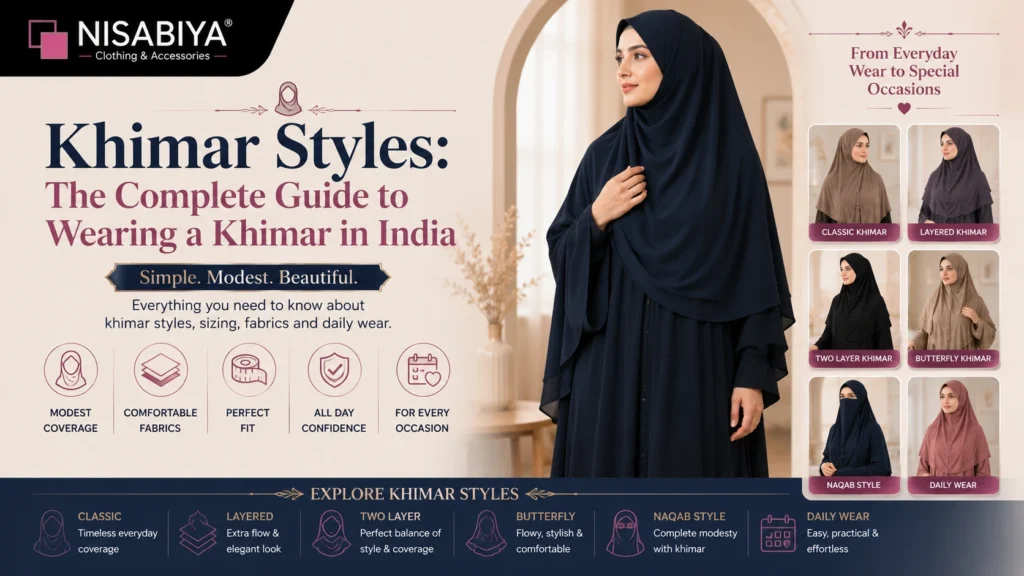
Khimar Styles: The Complete Guide to Wearing a Khimar in India
What is a khimar and how is it different from a hijab? Khimar styles, sizing, fabrics and wearing tips for…
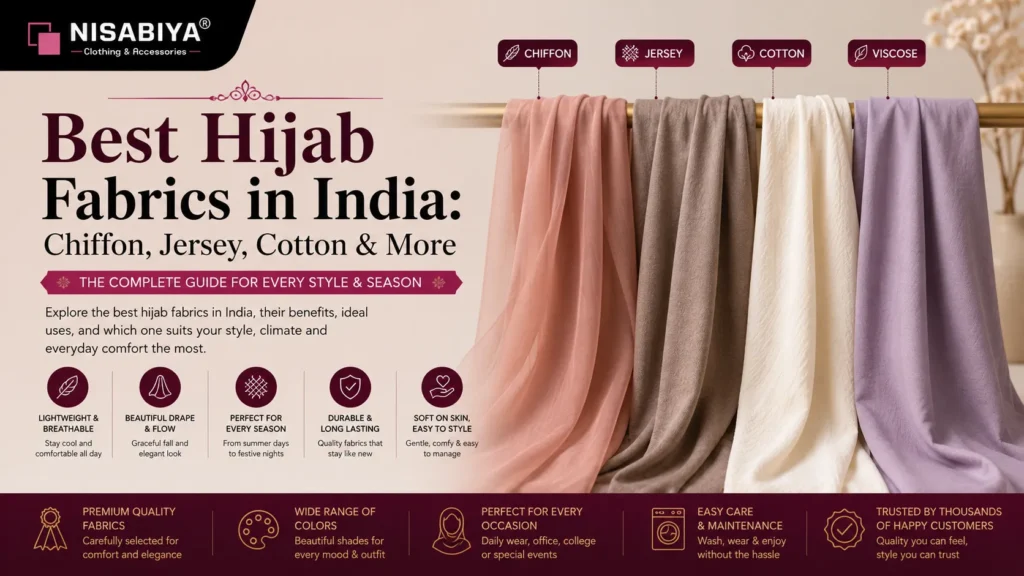
Read Article →Walk into any fabric shop in India and you’ll find shelves stacked with scarves labelled chiffon, georgette, cotton, crepe and “jersey lycra” — and very little help deciding which one is right for you. The truth is, the best hijab fabric isn’t the most expensive one on the rack; it’s the one that suits your weather, your routine and your patience for ironing. This guide breaks down the main hijab fabrics we stitch and stock at NISABIYA® in plain language, so your next hijab — or your next school bulk order — is the right one the first time.
If you’re still deciding between hijab styles, our 10 easy hijab styles guide pairs nicely with this one. This post assumes you’ve picked your style and now need to choose the fabric underneath it all.
Before we compare options, it helps to know what a hijab fabric is really doing for you. Four things decide how a scarf feels by the end of a long day:
Keep those four in mind and most hijab fabric decisions answer themselves.
Chiffon is the lightweight, slightly sheer fabric you see most in wedding and Eid hijabs. It drapes beautifully, looks elegant under gold accessories, and packs down to almost nothing — which is why it’s the default choice for photos and special days.
Jersey is the hijab fabric most regular wearers end up loving. It’s a soft, stretchy knit that doesn’t slide, barely creases, and needs almost no ironing. In plain terms: it behaves. That’s why jersey hijabs dominate our school hijab collection — teachers, students and working women pick it for the same reason.
Cotton hijabs are the natural choice for hot, humid Indian cities. Cotton breathes, absorbs sweat and feels kind on sensitive skin. It’s also the most sustainable mainstream fabric, which matters if you’re building a sustainable modest fashion wardrobe. Look for organic or Better Cotton-certified options when you can — certification from Better Cotton Initiative is a quick way to check.
Viscose and crepe hijabs sit somewhere between chiffon and cotton — soft, slightly heavier, with a more structured drape that holds a style well. Nida, which we use heavily in abayas and burqas, is a matte, opaque fabric that’s increasingly popular for hijabs too. Our crepe vs nida vs georgette guide compares these in more depth, but for hijabs the short version is: crepe and viscose for polish, nida for opacity and structure in cooler months.
India’s climate is rarely one thing, so match the hijab fabric to your season and your hours:
When you’re ordering a custom hijab from us, tell us your city and your routine rather than just a colour. We’ll recommend the hijab fabric that suits both.
You can judge a hijab fabric in thirty seconds without any expert training:
These four tests have settled more fabric debates for our customers than any amount of fabric theory.
For school hijabs, comfort and durability beat everything. Lightweight jersey is our most-ordered school hijab fabric because it stays put through classes, doesn’t need ironing and survives weekly washing. Cotton is the runner-up for schools in hotter states. Whichever you choose, order a swatch or sample before committing to a bulk school order — our wholesale school hijab guide explains the ordering checklist in detail.
Most hijabs are ruined by heat, not by use. Wash chiffon and viscose by hand in cool water with mild detergent, dry in shade, and iron on low heat or use a steamer. Jersey barely needs any of this — a gentle machine cycle in a mesh bag and a shake to dry is usually enough. The same care rules we cover in our abaya care guide apply to hijabs: cool water, shade drying and low heat keep colours deep and fabrics soft for years.
Cotton is the best hijab fabric for heat — it breathes and absorbs sweat. Lightweight jersey is the best low-maintenance alternative when you want zero ironing.
Mostly yes. Chiffon is thin and slippery, so a grip underscarf or bonnet keeps it in place and provides fuller coverage.
Jersey, for most people. It doesn’t slide, doesn’t crease and feels soft against the face — that combination is hard to beat for a full day out.
Five to seven is a practical rotation — enough to rotate daily and still have one clean during monsoon drying delays.
For durability and zero-iron convenience, jersey wins for most schools. In very hot states, cotton is more comfortable for the students.
Choosing the right hijab fabric is the difference between a scarf you fight with every morning and one you forget you’re wearing. Start with your climate and your routine, apply the four tests above, and you’ll pick right every time. Browse our school hijab and hijab collection for fabric options, or message us on WhatsApp with your city, routine and colour preference — we’ll recommend the fabric before you order, free of charge.
NISABIYA® Styling Team — Custom abaya, burqa, naqab & hijab specialists — Pan India delivery since 2018.
Hijab Fabric Options, Made to Order — Jersey, cotton, chiffon or nida, stitched to your size and style.
Loved this guide? Get styled by our team on WhatsApp — free advice, no obligation.
💬 Order Custom Abaya on WhatsApp
What is a khimar and how is it different from a hijab? Khimar styles, sizing, fabrics and wearing tips for…
Read Article →