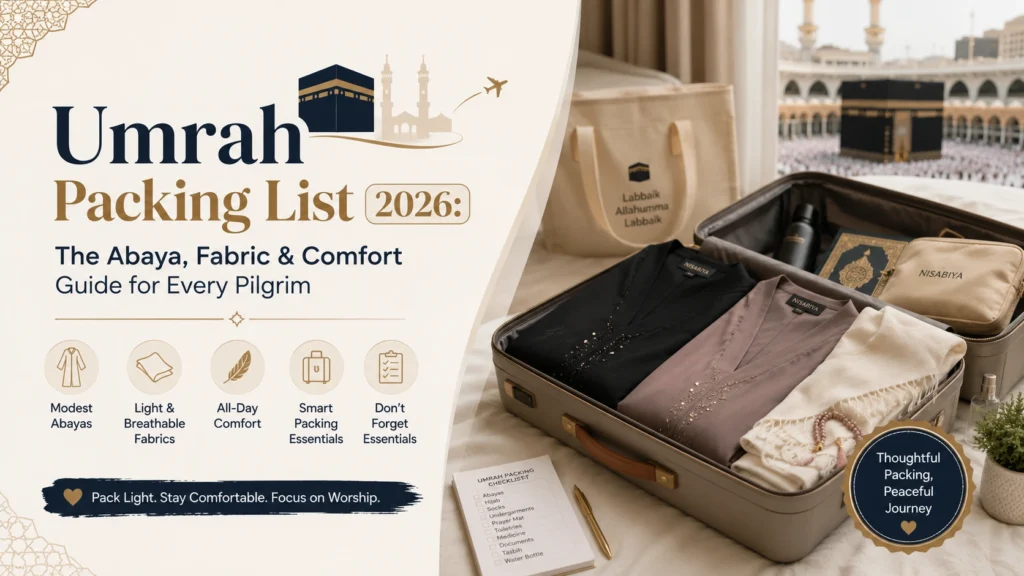
Umrah Packing List 2026: The Abaya, Fabric & Comfort Guide for Every Pilgrim
Planning Umrah or Hajj? Here's exactly what abaya, fabric and layers to pack for hours of standing, walking and prayer…
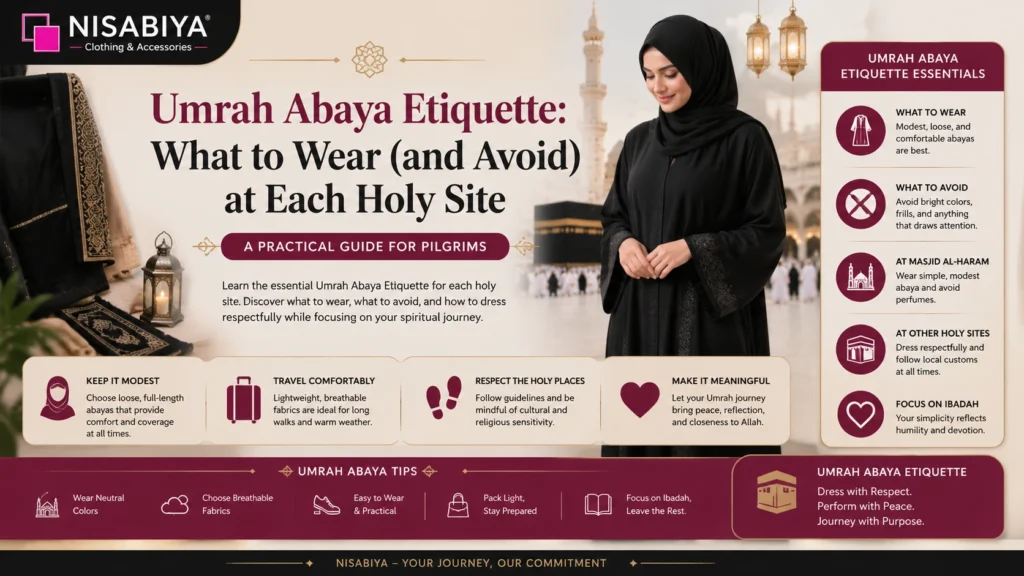
Read Article →Umrah Abaya Etiquette: Beyond fabric and fit, one of the most common questions we get before Umrah season is simpler than it sounds: “Is this actually appropriate to wear there?” It’s a fair worry — between conflicting advice online and photos of a huge range of styles at the Haram, it’s easy to feel unsure. This guide focuses specifically on etiquette and appropriateness, separate from our practical packing guide, which covers fabric and quantity instead.
Every specific rule below comes back to one underlying idea: modest, loose-fitting, non-transparent clothing that doesn’t draw attention to the body’s shape. There is no single official “Umrah abaya” design — what matters is that the garment fulfills this principle, not the brand, cut, or price point. Understanding the “why” behind the guidance makes it far easier to make good judgment calls in situations a checklist doesn’t cover.
The same general modesty principles apply in Madinah, with a slightly more relaxed practical atmosphere than the Haram during peak Tawaf hours, since there’s typically less physical crowding. The main additional consideration here is weather-based rather than etiquette-based — Madinah’s evenings can be notably cooler than Makkah’s daytime heat, so a lightweight shawl for layering is genuinely useful here specifically.
No — this is one of the most persistent misconceptions. Black is the traditional and most common choice, largely for practical and cultural reasons rather than religious requirement, but any modest, loose, non-transparent color is acceptable. As covered in our packing guide, lighter shades can actually be more comfortable in daytime heat.
Generally yes, as long as it remains modest overall and doesn’t draw excessive attention. Subtle embroidery on sleeves or hems is common and unremarkable; extremely bold, eye-catching patterns are less traditional in this specific context, more a matter of local custom and personal comfort than a formal rule.
Ihram requirements are more specific and are worth confirming with your group leader, scholar, or the official guidance from your travel operator, since they involve particular restrictions during that specific ritual state that go beyond general daily modest dress. For authoritative, up-to-date guidance on Ihram and pilgrimage requirements generally, the official Saudi Ministry of Hajj and Umrah portal is the right reference, rather than informal advice from social media.
If you watch closely at the Haram, you’ll notice huge diversity in exact style, color and fabric among pilgrims from different countries — there’s no single uniform look, and that diversity itself reflects how flexible the actual requirement is, as long as the core modesty principle is respected. Comfort and practicality, more than any specific fashion choice, is what most experienced repeat pilgrims prioritize by their second or third trip.
If you’re traveling with an organized group or tour operator, many will provide specific guidance on dress expectations for group photos, coordinated timing, and any group-specific arrangements — it’s worth asking your group leader early rather than assuming general etiquette alone covers everything. Groups traveling together sometimes coordinate loosely on color for identification purposes in crowds, which is a practical consideration separate from religious etiquette but genuinely useful for larger tour groups trying to stay together at the Haram.
If you’re traveling with daughters, the same general modesty principles apply, adjusted sensibly for age and practicality. Younger children are generally not held to the same strict expectations as adults, though many parents choose to introduce a simple abaya or modest outfit as part of the experience itself — our guide to kids’ Islamic wear covers sizing and comfort specifics if you’re preparing an outfit for a daughter joining you. Comfort and ease of movement matter even more for children given the long hours of walking and standing involved, so prioritize breathable fabric and simple, secure closures over elaborate detailing for a child’s travel outfit.
Unsure if your outfit is appropriate?
Send us a photo or description on WhatsApp before you travel — happy to give honest, practical feedback.
Understanding the “why” behind these guidelines makes the practical choices much easier once you’re there, focused on your worship instead of second-guessing your outfit. Browse our Umrah & Hajj travel abaya collection, revisit our full packing guide for fabric and quantity planning, or message us directly with any specific question before you travel.
Loved this guide? Get styled by our team on WhatsApp — free advice, no obligation.
💬 Order Custom Abaya on WhatsApp
Planning Umrah or Hajj? Here's exactly what abaya, fabric and layers to pack for hours of standing, walking and prayer…
Read Article →